
MIG welding fume extraction isn't just a nice-to-have safety feature—it's an absolute necessity for any serious welding operation. Whether you're running a small fabrication shop or managing an industrial facility, understanding how to properly extract welding fumes from your workspace can mean the difference between healthy, productive welders and a workplace riddled with health risks and compliance issues.
If you've ever wondered why your welders seem to get tired faster during long MIG welding sessions, or if you're concerned about the long-term health effects of welding fumes, you're asking the right questions. The smoke and fume particulate generated during welding processes contains hazardous fumes that can seriously impact both immediate productivity and long-term health outcomes.
TLDR
• MIG welding fumes are serious health hazards that require proper extraction systems to protect welders from both immediate effects like metal fume fever and long-term health consequences.
• Source capture extraction systems that pull fumes away from the breathing zone before they disperse are the most effective solution, whether using integrated fume guns or traditional setups with separate extraction equipment.
• System selection depends on your specific needs - portable units offer flexibility while fixed installations provide consistent high-volume extraction for dedicated welding stations.
• Proper maintenance and operation are crucial for continued effectiveness, including regular filter replacement, airflow monitoring, and welder training on correct positioning and operation.
Ready to Protect Your Welders with Superior Fume Extraction?
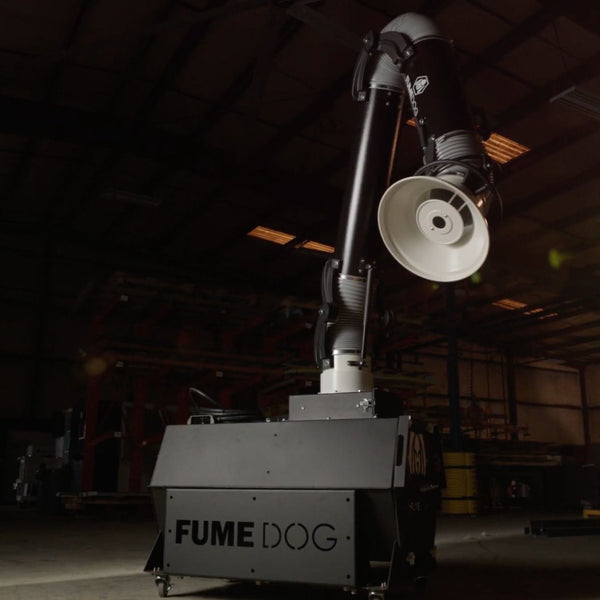
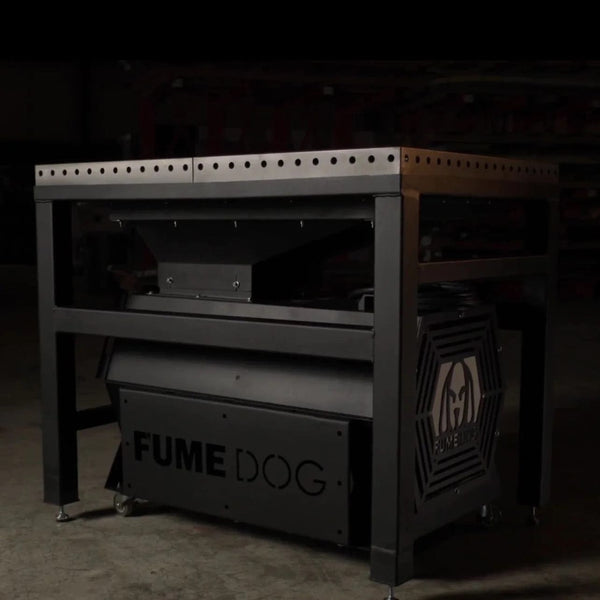
Don't let welding fumes compromise your team's health and productivity any longer. Fume Dog's proven extraction systems deliver the real-world performance your operation needs to keep welders safe and productive. With 1,200 CFM of actual extraction power and designs that work in real production environments, our systems provide the protection your welders deserve.
Browse Fume Dog's complete collection of fume extraction solutions and discover why welders trust Fume Dog to keep their air clean and their operations running smoothly.

See Our Featured Products
Understanding MIG Welding Fumes and Their Health Risks

What Are Welding Fumes and Why Are They Dangerous?
Welding fumes are a complex mixture of metallic particles and gases that form when metals are heated above their melting point during welding. These fumes contain a cocktail of potentially harmful substances that can cause immediate discomfort and serious long-term health problems. The breathing zone around welders becomes contaminated with these particles, creating an environment where operator fatigue is just the beginning of the problems.
The health risks associated with welding fume exposure are well-documented and serious. Short-term exposure can lead to symptoms like headaches, dizziness, and respiratory irritation. Long-term exposure to these hazardous fumes can result in more severe conditions including lung disease, neurological problems, and even cancer. That's why understanding what compounds are found in common welding fumes is crucial for any welding operation.
One of the most immediate concerns for welders is metal fume fever, a flu-like illness that can develop within hours of exposure to certain metallic fumes. The good news is that this condition is entirely preventable with proper fume extraction systems. Learning how to prevent metal fume fever should be a priority for every welding operation.
How MIG Welding Processes Generate Hazardous Fumes
MIG welding, also known as Gas Metal Arc Welding (GMAW), creates fumes through several mechanisms. When the welding torch heats the base metal and consumables to extreme temperatures, vaporization occurs at the weld pool. The shielding gas, while protecting the weld from atmospheric contamination, doesn't prevent fume generation—it actually helps carry these particles away from the weld area.
The type and amount of fumes generated depend on several factors including the base metal composition, welding position, power settings, and the specific consumables being used. Stainless steel, for example, produces fumes containing chromium and nickel, while welding on galvanized materials releases zinc oxide fumes. Each presents its own set of health challenges.
If you're new to MIG welding or want to brush up on the basics, you can learn about what MIG welding is to better understand why proper fume extraction is so critical for this welding process.
Essential Fume Extraction Systems for MIG Welding Operations
Portable Fume Extractors vs. Fixed Installation Systems
When it comes to protecting your welding environment and ensuring air quality, you have two main categories of extraction systems to choose from: portable units and fixed installations. Each has its place in a comprehensive fume extraction strategy.
Portable systems offer flexibility and can be moved between workstations as needed. These units typically feature their own filtration system and can be positioned close to the welding operation for maximum efficiency. They're particularly useful for shops that handle varied work or need to extract fumes from different locations throughout the facility.
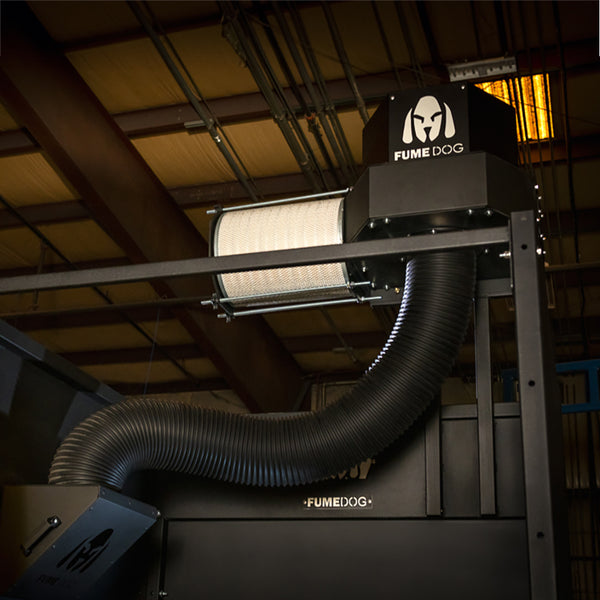
Fixed installation systems, on the other hand, provide consistent, high-volume extraction power and are ideal for dedicated welding stations. These systems often integrate with the facility's overall ventilation system and can handle multiple welding operations simultaneously. When properly designed, fixed systems minimize energy consumption while maximizing extraction efficiency.
The choice between portable and fixed systems often comes down to your specific operation needs, facility layout, and budget considerations. Many successful shops use a combination of both to ensure complete coverage. For more guidance on making this decision, check out how to choose the right fume extractor system for your operation.
Key Components: Shroud, Hose, and Nozzle Design
The effectiveness of any fume extraction system depends heavily on its components working together seamlessly. The shroud design plays a crucial role in capturing fumes at the source before they can disperse into the welding environment. A well-designed shroud creates the right airflow patterns to pull smoke and fume particles away from the welder's breathing zone without interfering with the welding process.
The hose system must balance flexibility with airflow efficiency. Larger diameter hoses reduce restriction and allow for better extraction volume, but they can become unwieldy if oversized for the application. The hose material and construction also matter—it needs to withstand spatter, resist abrasion, and maintain its shape under vacuum.
Quality nozzle design is where the rubber meets the road in fume extraction. The gas nozzle must not only provide proper shielding gas coverage but also work effectively with the extraction system. Some systems integrate the extraction directly into the welding torch, while others use separate extraction nozzles positioned near the weld area.
Choosing the Right Fume Extraction MIG Gun Setup
Long-Term Health Effects of Chronic Exposure

Fume Guns vs. Traditional Welding Torch Options
The debate between fume extraction mig gun setups and traditional welding torch configurations with separate extraction systems is ongoing in the welding industry. Fume guns integrate the extraction directly into the mig gun itself, providing extraction right at the source of fume generation. This approach offers excellent capture efficiency since the extraction point is as close as possible to where the fumes are created.
Traditional setups use a standard mig gun with separate extraction equipment positioned nearby. This approach offers more flexibility in gun selection and often provides better welding performance since the gun design isn't compromised by extraction requirements. However, it may not capture fumes as effectively as integrated systems.
The choice often comes down to your specific applications and priorities. If maximum fume capture is the priority and you can work within the limitations of current fume gun technology, integrated solutions might be the way to go. If welding performance and gun versatility are more important, traditional setups with high-quality separate extraction might serve you better.
For shops looking to upgrade their extraction capabilities, exploring portable welding fume extractors can provide the flexibility to work with either approach depending on the specific job requirements.
Gas Nozzle and Shielding Gas Considerations
The relationship between your gas nozzle design and extraction system performance is more critical than many welders realize. The shielding gas flow rate and pattern directly affect how fumes behave around the weld area. Too little gas flow and you risk porosity in your welds; too much and you can create turbulence that actually pulls atmospheric contamination into the weld zone.
When extraction is added to the equation, the balance becomes even more delicate. The extraction system must pull away fumes without disturbing the protective gas shield around the weld pool. This requires careful consideration of extraction volume and positioning relative to the gas nozzle.
Different shielding gas mixtures also behave differently under extraction. Pure argon, argon/CO2 mixtures, and tri-mix gases each have different densities and flow characteristics that affect how they interact with extraction systems. Understanding these interactions is key to optimizing both weld quality and fume extraction efficiency.
Optimizing Your Welding Environment for Safety and Productivity
Protecting the Breathing Zone and Minimizing Exposure
The breathing zone—that critical area within 10 inches of a welder's nose and mouth—is where the battle for air quality is won or lost. Even the best extraction systems can fail to protect welders if they're not properly designed to control fumes in this critical area. Effective fume extraction systems create controlled airflow patterns that consistently pull contaminated air away from the welder's face.
Positioning is everything when it comes to minimizing exposure. The extraction point should be positioned to intercept fumes before they can reach the breathing zone, but not so close that it interferes with visibility or welding performance. This often requires adjustable extraction arms or flexible positioning systems that can be optimized for different welding positions and joint configurations.
Cross-drafts and general ventilation can either help or hurt your extraction efforts. While some general ventilation is beneficial for overall air quality, strong cross-drafts can actually blow fumes toward the welder or disrupt shielding gas coverage. The key is creating controlled airflow that works with your extraction system rather than against it.
For comprehensive strategies on maintaining clean air in your welding environment, explore these tips for maximizing indoor air quality for welders that go beyond just extraction systems.
Maintenance and Operation Best Practices
Even the best fume extraction system will fail to protect your welders if it's not properly maintained. Regular maintenance isn't just about replacing filters—though that's certainly important—it's about ensuring the entire system continues to operate at peak efficiency. This includes checking for leaks in the ductwork, monitoring airflow rates, and ensuring that all seals and gaskets remain intact.
Filter replacement schedules should be based on actual usage and monitoring rather than arbitrary time intervals. A heavily used system in a high-production environment will need more frequent filter changes than a system used occasionally for light work. Many modern systems include differential pressure gauges that indicate when filters are becoming loaded and need replacement.
Regular calibration of extraction volume and airflow patterns is also crucial. Over time, ductwork can develop restrictions, fans can lose efficiency, and extraction points can become misaligned. Periodic testing ensures that your system continues to provide the protection levels it was designed for.
Training your welders on proper system operation is just as important as the technical maintenance. Welders need to understand how to position extraction equipment for maximum effectiveness, when to adjust extraction volume for different applications, and how to recognize when systems aren't working properly.
Fume Dog's Superior MIG Welding Extraction Solutions
When it comes to MIG welding fume extraction, Fume Dog stands head and shoulders above the competition. Our systems are designed by welders, for welders, with real-world performance that you can actually see working—not just fancy specifications on paper that don't translate to actual fume capture.
Our extraction systems deliver the kind of performance that makes other manufacturers nervous. With 1,200 CFM of actual extraction power (not some theoretical number that only exists in perfect laboratory conditions), our systems pull fumes away from your welders' breathing zones with authority. You don't have to take our word for it—watch our performance videos and see for yourself.
The difference is in the details that other companies overlook. While competitors focus on making their systems look pretty, we focus on making them work. Our extraction arms maintain their position without drooping, our filters last longer because they're designed for real-world conditions, and our systems are built to handle the demands of actual production welding environments.
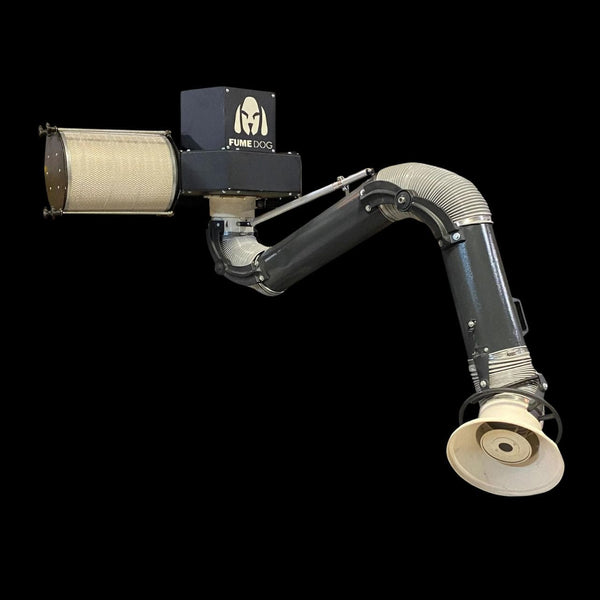
What sets Fume Dog apart is our understanding that different welding applications require different extraction approaches. Whether you need welding fume extractor arms for flexible positioning or integrated solutions for specific applications, we have systems that actually work in the real world, not just on specification sheets.
Our commitment to protecting welders goes beyond just building good equipment. We provide the tools and information you need to create a truly safe welding environment, from proper system sizing to installation guidance to ongoing support. Because at the end of the day, healthy welders are productive welders, and productive welders build better businesses.
Frequently Asked Questions
What are fume extraction guns and how do they compare to traditional setups?
Fume extraction guns integrate the extraction mechanism directly into the welding gun itself, providing extraction at the point of fume generation. While they typically offer excellent capture efficiency, they may have limitations in terms of gun weight, cable management, and welding performance compared to traditional setups with separate extraction systems. The choice depends on your specific application requirements and performance priorities.
How do I determine the right extraction volume for my MIG welding operation?
Extraction volume requirements vary based on factors including the type of materials being welded, welding position, production volume, and workspace configuration. A properly sized system should provide sufficient airflow to capture fumes without disrupting shielding gas coverage. Professional assessment of your specific operation is typically the best way to ensure compliance with safety standards while maintaining welding quality.
What extraction power should I look for in a fume extraction system?
Extraction power needs to be sufficient to overcome the natural buoyancy and dispersion of welding fumes while maintaining consistent performance throughout the filter's life cycle. The key is actual measured performance rather than theoretical specifications. Systems should maintain adequate extraction volume even as filters become loaded, ensuring consistent protection for welders.
How do I ensure compliance with welding fume exposure regulations?
Ensuring compliance requires a comprehensive approach including proper system design, regular maintenance, air quality monitoring, and worker training. Compliance isn't just about having extraction equipment—it's about demonstrating that your systems effectively control exposure levels. Documentation of system performance and regular air quality assessments are typically required for regulatory compliance.
What's the difference between lead exposure and other welding fume hazards?
Lead exposure in welding typically occurs when working on painted surfaces or materials containing lead, creating unique health risks and regulatory requirements. Lead exposure controls often require more stringent measures than general welding fume extraction, including specialized filtration and additional worker protection measures. Any operation involving potential lead exposure requires specific safety protocols beyond standard fume extraction.
How do alternative fume extraction methods compare to dedicated extraction systems?
Alternative methods such as general ventilation, respiratory protection, or work practice controls can provide some protection but typically don't offer the same level of effectiveness as dedicated extraction systems. While these methods may have their place in a comprehensive safety program, source capture extraction is generally recognized as the most effective means of controlling welding fume exposure at the point of generation.