When choosing between a fume extractor arm and a downdraft table for your welding environment, the decision can significantly impact both safety and efficiency in your workspace. Both extraction systems offer unique advantages for capturing fumes and providing cleaner air, but understanding their differences is crucial for making the right choice for your specific welding process.
TLDR
• Fume extraction arms offer maximum flexibility and portability, ideal for varied welding positions and diverse applications
• Downdraft tables provide integrated work surface and extraction, perfect for repetitive production work and area-wide fume control
• System selection should be based on welding processes, workpiece variability, space constraints, and safety requirements
• Both systems can effectively meet OSHA regulations when properly designed, installed, and maintained for your specific applications
Ready to Choose Your Ideal Fume Extraction Solution?
Don't let poor air quality compromise your welding operation's safety and productivity. Whether you need the flexibility of extraction arms or the integrated efficiency of downdraft tables, Fume Dog has the perfect solution for your workspace. Our systems are specifically designed to provide superior protection while meeting the demands of professional welding environments.
Browse our complete collection to find the extraction system that matches your specific needs and begin working with cleaner, safer air today.
Understanding Welding Fume Extraction Systems

See Our Featured Products
What Are Fume Extraction Arms?

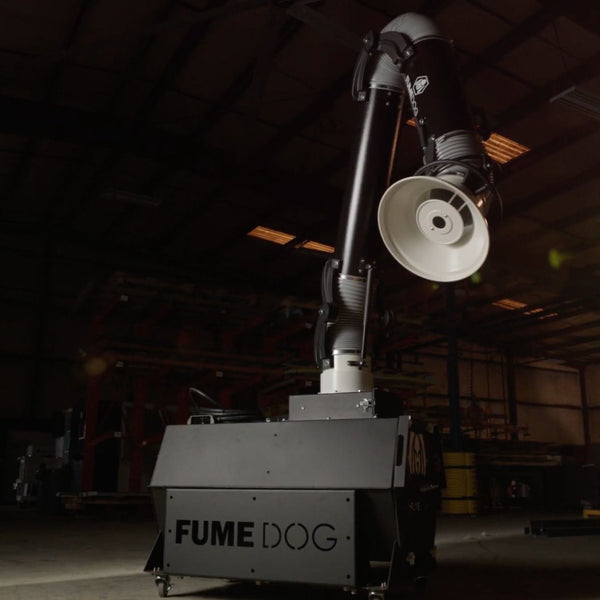
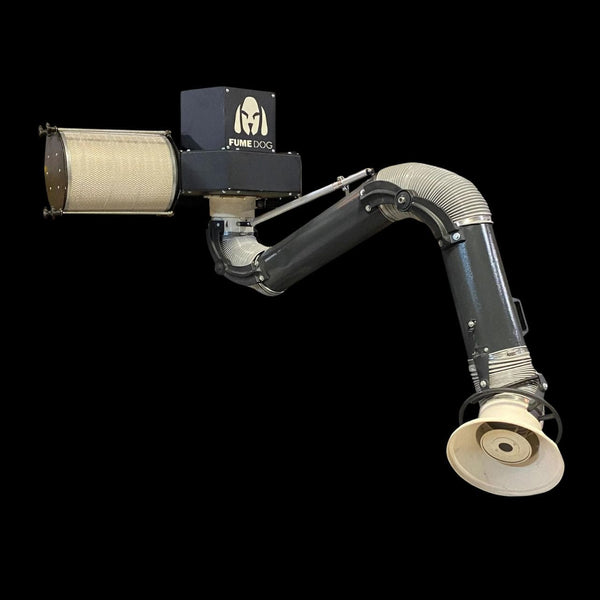
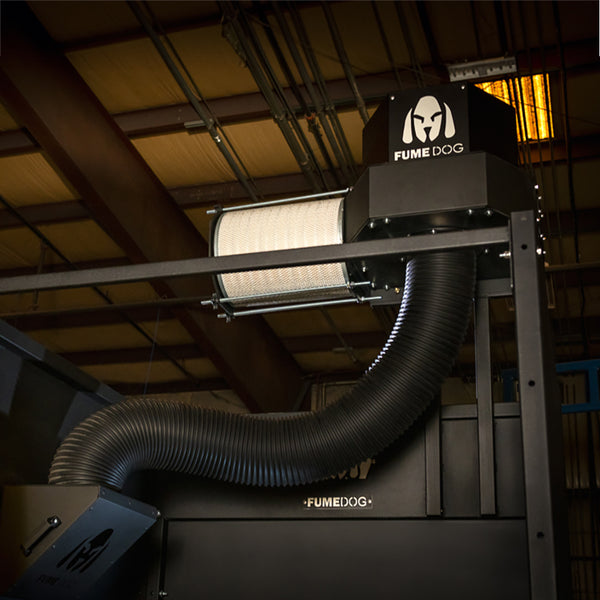
Fume extraction arms are flexible, articulating systems designed to position the capture hood directly at the source of fume generation. These portable fume extractor solutions offer exceptional flexibility, allowing welders to move the extraction point wherever needed. Unlike downdraft tables, fume extraction arms can be positioned precisely where welding occurs, making them ideal for stick welding and tig welding applications where work pieces vary in size and position.
The extraction system works by creating stronger velocity airflow at the point of capture, pulling fumes away from the welder's breathing zone before they can disperse throughout the welding environment. This targeted approach ensures that captured directly at the source, providing best protection for operators.
What Are Downdraft Tables
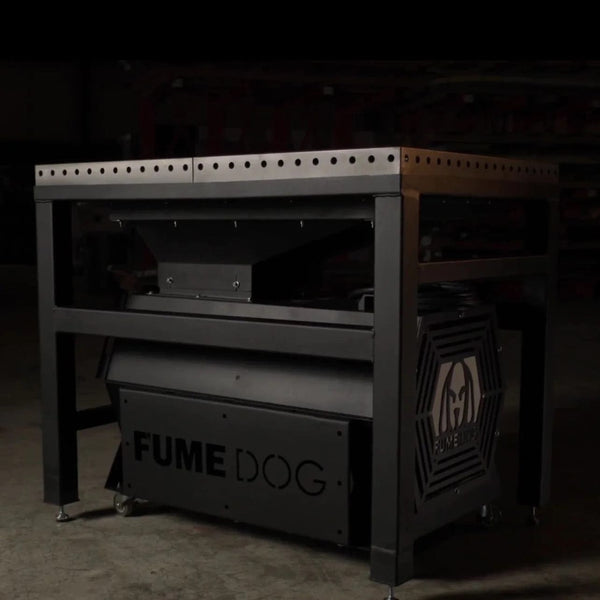
Downdraft tables function as an integrated work surface and extraction system, pulling air movement downward through the table surface to capture fumes and contaminants. These systems create a uniform airflow pattern across the entire work surface, making them particularly effective for projects that require consistent fume extraction across a large area.
If you want to learn more about what downdraft tables are and their specific applications, downdraft tables come in both wet downdraft tables and dry downdraft tables configurations, each designed for different types of processes including welding, cutting, grinding, and sanding operations.
Key Differences Between Extraction Arms and Downdraft Tables
Workspace Flexibility and Air Movement
The fundamental difference between these extraction systems lies in their approach to airflow and workspace utilization. Fume extraction arms provide targeted extraction with precise positioning, allowing for little operator involvement in adjusting the capture point. This flexibility makes them an ideal solution for varying work pieces and welding positions.
Downdraft tables, conversely, offer a dedicated work surface with built-in extraction capabilities. The air movement in these systems flows consistently downward, creating a uniform capture zone across the entire table surface. This design is specifically designed for applications where the work stays in one location and requires higher efficiency across a broader area.
Capturing Fumes: Direct vs. Surface-Based Extraction
When it comes to extracting fumes, each system employs different strategies. Fume extraction arms excel at capturing fumes at their source, positioning the capture hood within inches of the welding arc. This proximity allows for maximum efficiency in removing contaminants before they enter the welder's breathing zone.
Downdraft tables work by pulling air and fumes downward through the work surface, creating a protective barrier that prevents fumes from rising into the work area. To explore different source capture options and understand how each method impacts safety and performance in various applications.
Installation and Portability Considerations
Installation requirements differ significantly between these two solutions. Portable fume extractor arms typically require minimal setup and can be easily repositioned as needed. Many systems feature magnetic bases or hanging configurations that provide quick deployment and easy relocation.
Tables require dedicated floor space and often permanent installation, making them less suitable for facilities where workspace flexibility is essential. However, this permanent installation allows for integration with existing ventilation systems and provides a stable platform for precision work.

Making the Right Choice for Your Welding Environment
Selecting between fume extraction arms and downdraft tables depends on your specific welding environment, processes, and safety requirements. Consider factors such as:
- Types of welding processes (MIG welding applications, stick welding, TIG welding)
- Work piece sizes and variability
- Available floor space and installation requirements
- Budget considerations for equipment and maintenance
- Regulatory compliance requirements
For operations requiring maximum flexibility and the ability to protect welders across various work positions, extraction arms provide the ideal solution. When consistent, area-wide extraction is needed for repetitive work, downdraft tables offer superior performance and integration.
The safest possible solution often involves evaluating your specific needs and choosing the system that provides the most effective protection for your unique welding environment. Both systems can provide stronger velocity and more systems capabilities when properly selected and installed.
Frequently Asked Questions
What are fume extraction mig guns and how do they compare to traditional extraction methods?
Fume extraction mig guns integrate extraction directly into the welding gun, providing source capture at the arc itself. While highly effective for MIG welding, they're more specialized than traditional extraction arms or downdraft tables which serve many industries and applications.
How do combustible dust and combustible metal dust affect the choice between extraction systems?
Combustible metal dust requires special consideration in system selection. Wet downdraft tables are often preferred for aluminum and other combustible metals prohibits dry collection systems. Both systems must be designed to prevent create explosive dust conditions and handle explosive dust safely.
What role does properly controlled airflow play in even the toughest applications?
Properly controlled airflow ensures that extraction systems perform effectively in toughest machining applications. The key is maintaining sufficient air velocity while preventing turbulence that could disrupt welding processes or reduce extraction efficiency.
How do these systems handle other combustible metal dust beyond welding fumes?
Both extraction systems can be configured to safely handle other combustible metal dust from grinding, cutting, and machining operations. Wet systems are often required for combustible metals, while dry systems work well for most standard applications with appropriate regulatory guidelines compliance.
What makes an all in one solution more effective than separate systems?
An all in one solution combines work surface, extraction, and filtration in a single unit, reducing complexity and improving efficiency. This integration provides little operator involvement requirements while ensuring consistent performance across toughest applications.
How do biased opinions affect the selection process when business grows?
As business grows, it's important to avoid biased opinions and focus on objective performance criteria. The safest possible solution should be selected based on actual application requirements rather than simply turn to familiar equipment without proper evaluation.