
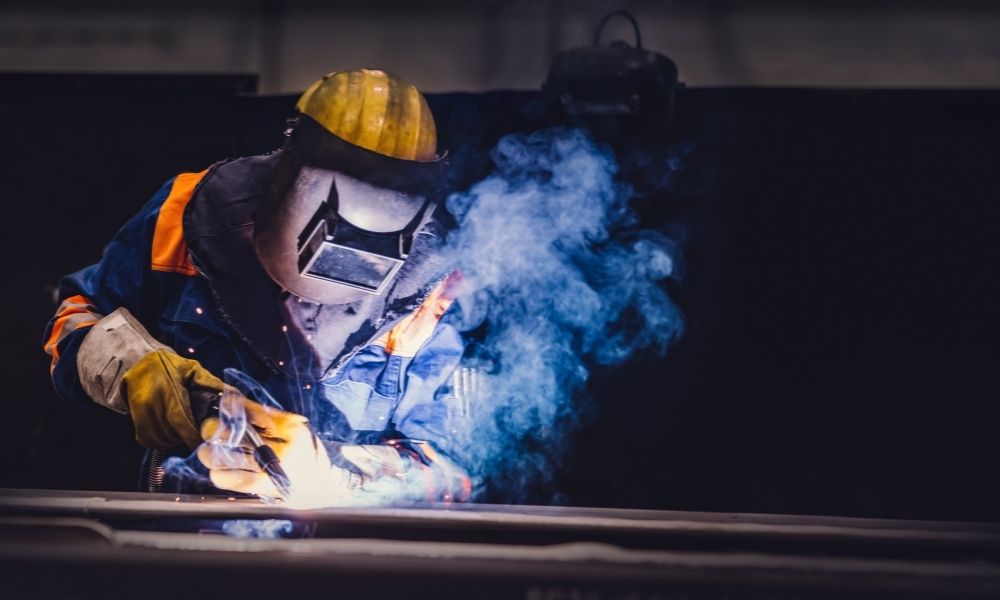
How To Reduce Welding Fume Exposure: 3 Ways To Protect Your Lungs
If you’re a welding enthusiast or a bona fide professional, you recognize the dangers that come from working with metal and heavy machinery. Aside from physical hazards, toxins produced during metal fabrication threaten your internal health. Spending extended periods in a poor workshop may lead to ongoing health issues, some of which can prove fatal. To avoid disaster, check out these three ways to minimize exposure to welding fumes. Welding fume is now classified as a Group 1 human carcinogen, which makes reducing welding fume exposure a compliance question rather than a preference.
Key Takeaways
-
Welding fumes are condensed metal vapor carrying iron oxide, manganese, zinc oxide, and hexavalent chromium, and the International Agency for Research on Cancer classifies them as a Group 1 carcinogen tied to lung cancer.
-
Local exhaust ventilation captures fume at the arc before it reaches the welder’s breathing zone. General dilution air does not, and regulators no longer accept it indoors.
-
Personal protective equipment and respiratory protective equipment back up engineering controls. They never replace them.
-
Fume generation responds to technique: power settings, shielding gas, filler metal and transfer mode all move the number up or down.
-
OSHA enforces a hexavalent chromium limit of 5 µg/m³, and the UK Health and Safety Executive requires LEV for all indoor welding work.
Put Effective Controls in Your Weld Area
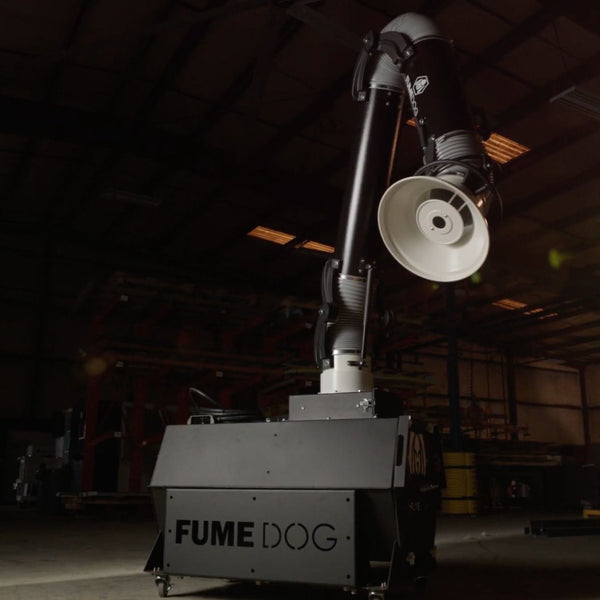
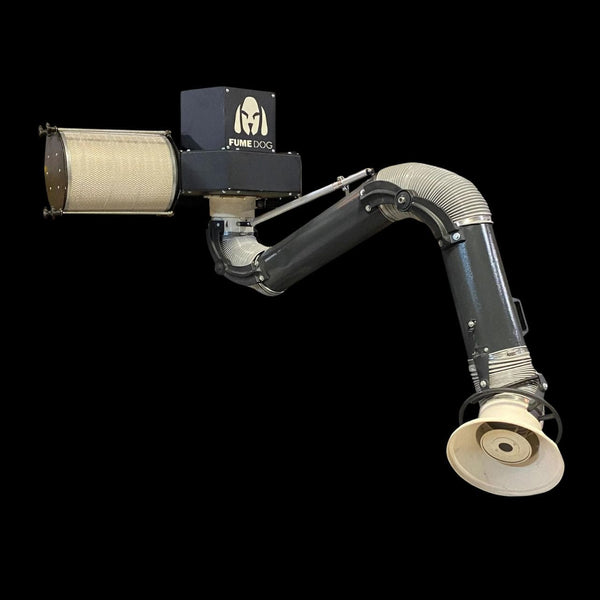
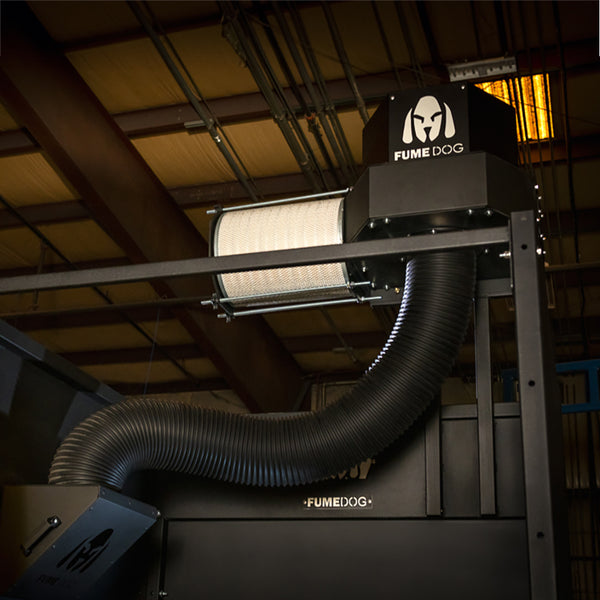
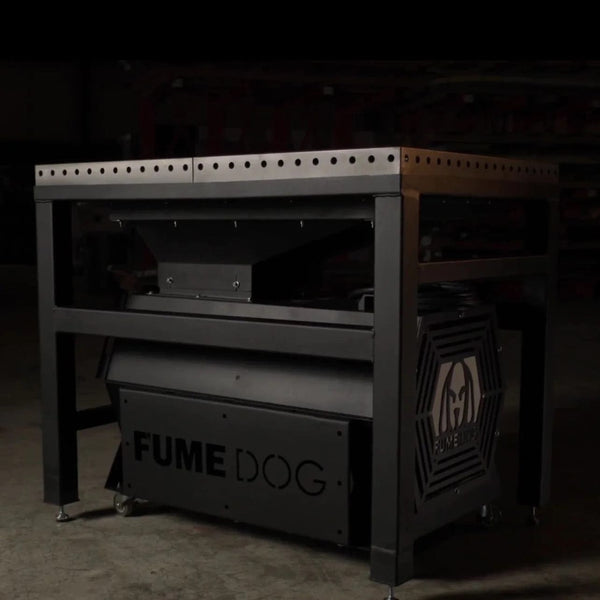
Explore portable extractors for changing job sites, wall-mounted units, and extractor arms for fixed bays, downdraft tables that pull grinding dust and weld fume straight down through the work surface, and welding booths with matching accessories for training shops. Not sure what your space needs? Size it free with our welding lab designer, browse the full range, or talk to our team, and we will spec it with you.

What Is Actually in Welding Fumes?
Welding fumes are not smoke from burning fuel. They are condensed metal vapor: microscopic particles that boil off the weld pool, the filler metal, and the base metal, then cool in the air within inches of your face. Typical components include iron oxide from mild steel, plus manganese, nickel, and hexavalent chromium when welding stainless steel and high alloy steels. Zinc oxide comes off galvanized coatings present on the work, and gases join in as well, including carbon monoxide and carbon dioxide from shielding gas breaking down in the arc. Old paint, oil, primer, and rust inhibitors add hazardous substances of their own. Before the first arc strikes, read the safety data sheets for your wire, welding rods, and base metal. They list the health effects and exposure limits that apply to that specific job.
The Health Risks of Breathing Fumes
Short term, breathing fumes loaded with zinc oxide or copper can trigger metal fume fever, a flu-like reaction that usually clears within a day or two. The long game is the serious one. Repeated fume exposure reduces lung function and drives occupational lung disease, including bronchitis, siderosis, and welder’s asthma. In 2017, the International Agency for Research on Cancer reclassified welding fume as a Group 1 human carcinogen, confirming an increased risk of lung cancer across the welding industry, including for welders who only ever run mild steel. High exposures carry further adverse health effects on the kidneys and nervous system, and welding activities in a confined space add an asphyxiation hazard as shielding gas displaces oxygen.
1. Wear Proper PPE
Any industrial job demands some form of personal protective equipment (PPE). Welding requires specialized gear that safeguards your skin and organs. Welding helmets and goggles both adequately prevent damage to your face and eyes. As for avoiding toxins in the air, you should wear a respirator mask to keep your lungs clean. No matter the work environment, you should always wear your PPE and ensure that your gear is functional and fits well. Match the respiratory protective equipment to the job rather than to habit. A fitted disposable N95 covers light, mild steel work in open air, while welding stainless steel, arc gouging, or any task in a confined space calls for a powered air-purifying respirator or supplied air. Fit-test it, and remember that a welding helmet blocks ultraviolet radiation and spatter but filters nothing you inhale. PPE is your last line of defense, not your first.
2. Have Efficient Ventilation
Personal protective equipment provides some defense against fumes. But without efficient ventilation, your physical well-being is at risk. Smaller operations can get by with open windows and large doors. But larger businesses with more welders need a more comprehensive solution. Fume Dog offers various extractors for every workshop. Our portable models are great for fluid environments, while our wall-mounted units utilize welding fume extractor arms to clean air in larger rooms. Open windows and roof fans dilute the air. They do not capture fume. Effective controls pull contaminated air away at the source, usually within 6 to 12 inches of the arc, before it ever reaches the welder’s breathing zone. That is precisely what local exhaust ventilation does, and it is why OSHA names LEV the preferred method for controlling welding fumes and why the Health and Safety Executive requires it for all indoor welding work in the UK. Set the hood close but slightly off-axis so it does not strip shielding gas off the weld pool and cost you weld quality. Capturing at the source also protects other workers sharing the bay, not only the person under the hood.

3. Carry Out Regular Fume Inspections and Training
Wearing the right gear and using competent extraction equipment are only the first steps in protecting your lungs from toxins. To ensure continued security, someone must consistently inspect the workshop’s systems and fume levels.
Additionally, you should clean all surfaces daily so that toxins don’t build. It’s best to keep every welder and employee educated on the dangers of toxic fumes and signs of overexposure. Hold regular refreshers with the entire staff to ensure everyone knows how to avoid hazards. This allows professionals to work more independently. Write it down. Appropriate safety procedures turn good intentions into habits that survive staff turnover: who checks filter pressure drop, how often arms and hoods are tested, and what happens when an alarm trips. Air sampling tells you where employee exposure actually sits against OSHA’s hexavalent chromium action level of 2.5 µg/m³ and any short-term exposure limit that applies to the gases in your shop. Log the results. Occupational health surveillance, including periodic lung function checks for welders with potential exposures, catches damage while it is still reversible, and swapping replacement filters on schedule keeps capture velocity where it belongs.
Additionally, Adjust the Process To Produce Less Fume
Fume generation is not fixed. Across manual welding and automated welding processes alike, the amount of fume produced responds to technique, and these adjustments cut worker exposure before you spend a dollar on equipment:
-
Process choice: tungsten inert gas welding produces the least fume, MIG sits in the middle, and stick welding with flux-coated welding rods produces the most. Submerged arc welding buries the arc under flux and emits almost none.
-
Power settings: higher amperage and voltage mean more fume. Run the lowest setting that still gives you a sound weld.
-
Transfer mode: spray transfer generates more fume than short-circuit or pulsed transfer on the same wire and shielding gas.
-
Preparation: grind, strip, or solvent-wipe paint, galvanizing, and rust inhibitors off the weld area first. And remember that grinding dust, plasma cutting, and arc gouging need capture too, even when no arc welding is happening.
Exposure Limits and What Regulators Expect
There is no single US permissible exposure limit for welding fumes. OSHA regulates the constituents instead, capping hexavalent chromium at 5 µg/m³ as an eight-hour average, with separate standards for manganese, nickel, and cadmium. Stainless steel welding in a poorly ventilated shop routinely runs several times that. In the UK, the Health and Safety Executive settled the argument in 2019: general ventilation is no longer acceptable indoors, LEV is required, and every system needs a thorough examination and test at least every 14 months. Whichever rulebook applies to you, the expectation is identical. Show that your control measures keep fumes below harmful levels, and keep the records that prove it. For further guidance, start with your safety data sheets and your regulator’s welding fume pages, then check our equipment FAQ for system-specific answers.

With these precautions to minimize exposure to welding fumes, you or your business can work more efficiently while maintaining a healthy state of being. For advanced fume extraction solutions, you should consider our array of competent systems designed for your workshop’s needs.
Frequently Asked Questions
How do I reduce welding fume exposure in a small home shop?
Same hierarchy, smaller scale. Prep the metal, weld in open air where you can, and put a hood right at the arc. A single portable extractor plus a properly fitted respirator will do far more to reduce exposure than any number of box fans, which simply push fume around the building.
How close should the extraction hood be when welding?
Roughly 6 to 12 inches from the arc, angled so fume travels away from your face. Capture velocity falls off sharply with distance, so an arm parked three feet back is close to decorative. Reposition it every time you move the work.
Will fume extraction pull my shielding gas and hurt weld quality?
Only if it is aimed badly or run wide open. Position the hood off-axis and use the airflow control so you are drawing from the fume plume rather than off the weld pool. Set up properly, extraction has no measurable effect on the weld.
Is mild steel welding fume really that dangerous?
Yes, and that assumption is exactly what the 2019 rule change targeted. Mild steel fume is a Group 1 carcinogen even without hexavalent chromium in the mix, so you should avoid breathing fumes from carbon steel just as carefully as from stainless.
What are the signs of metal fume fever?
Chills, fever, aching muscles, a metallic taste, and a dry cough, typically starting four to twelve hours after exposure and clearing within a day or two. It most often follows work on galvanized steel. Recurring episodes are evidence that your controls are failing, not a rite of passage.
Do I need extraction for grinding and plasma cutting too?
Yes. Grinding dust and plasma cutting fume are respirable and abrasive, and they load filters quickly. A downdraft table handles both by pulling contaminants down through the work surface and away from your face.
How long do fume extractor filters last?
About a year for a typical single-shift shop running clean steel and .045 wire, assuming weekly use of the cleaning system. Oily plate, heavier wire, and multi-shift schedules shorten that considerably. Our replacement filters are priced to be replaced on schedule rather than nursed along.
How do I choose the right fume extractor for my shop?
Ask three questions: what replacement filters actually cost, what the true fume arm diameter is behind the CFM claim, and what the housing is made of, because plastic has no place around an arc. Our Welding Lab Designer walks you through layout and sizing, or call the team, and we will spec it with you.